
Delhi Police have dismantled an interstate arms trafficking syndicate with alleged links to Pakistan, arresting nine individuals and seizing a cache of sophisticated firearms and ammunition.
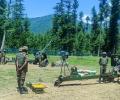
'India's security challenges are no longer confined to the Line of Control or the Line of Actual Control.'
'They also span cyber networks, economic systems, information warfare, technology ecosystems, maritime routes, and internal social cohesion.'
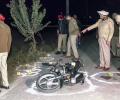
Delhi Police's Special Cell has arrested two operatives working for Pakistan-based gangster Shahzad Bhatti, foiling a plot to carry out attacks in Delhi-NCR.
The policy unveiled by the home ministry is based on seven key pillars to counter the terror threats emanating from India or abroad -- prevention, responses, aggregating internal capacities, human rights and "Rule of Law"-based processes.
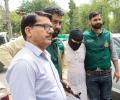
Delhi Police have arrested a suspected Lashkar-e-Taiba (LeT) handler, Shabir Ahmed Lone, in Delhi, uncovering a terror module with links to Pakistan's ISI. Lone is accused of running a network involved in pasting anti-national posters and planning terror activities across India.

Delhi Police have arrested a suspected Lashkar-e-Taiba (LeT) handler, Shabir Ahmed Lone, from the Ghazipur area. He is believed to have links with Pakistan's ISI and was allegedly involved in a terror module planning attacks in India.

Jammu and Kashmir Police, in coordination with central intelligence agencies, have detained several people from Haryana and Rajasthan for allegedly facilitating the acquisition of fraudulent identities, including passports, by terrorists linked to Lashkar-e-Taiba (LeT). The investigation uncovered an interstate module providing logistical support to terrorists by creating fake documents.
Lashkar-e-Taiba (LeT) terrorist Abdullah, alias Abu Hureira, who was tasked with establishing bases outside Jammu and Kashmir, adopted various professions, including share trading, to blend in with the local population. He was recently arrested along with other members of his network.

Lashkar-e-Taiba terrorist Umer Harris, also known as 'Khargosh', is believed to be in Saudi Arabia after escaping India using a forged passport. An investigation into the inter-state LeT terror module has exposed systemic loopholes and raised concerns about passport issuance processes.
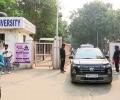
Police in Jammu and Kashmir have dismantled a Lashkar-e-Taiba (LeT) module, arresting five individuals, including a Pakistani terrorist who had been on the run for 16 years. The operation exposed a network spanning multiple states and involving forged documents and identities.

The Maharashtra ATS has arrested an engineering student from Mumbai for allegedly sharing online propaganda material linked to banned terrorist organisations. Two other individuals are also under investigation.
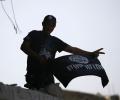
A Mumbai engineering student has been arrested by the Maharashtra ATS for allegedly sharing terrorist propaganda online related to banned organisations like Jaish-e-Mohammed and Islamic State, raising concerns about online radicalisation.

Indian Youth Congress President Uday Bhanu Chib was arrested after a disruptive shirtless protest at the AI Impact Summit in Delhi, leading to further investigation into potential conspiracy and funding.
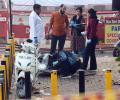
Security agencies are investigating how a terror module acquired and stored a large quantity of Ammonium Nitrate, suspected to be used in a recent deadly blast. The investigation focuses on the logistics and procurement network of the busted inter-state terror cell and highlights the ease with which restricted chemicals can be weaponized.
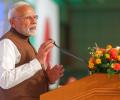
Showcasing India as an attractive investment destination, Modi said the country has political and economic stability as well as transparency and predictability in policy decisions.
In an unprecedented move, a Pakistani parliamentary panel has directed the Defence Ministry and the army to submit a report on corruption charges against three retired generals who were serving in a military-run transportation company.

Sheikh Sajjad Gul, the head of Lashkar-e-Taiba proxy The Resistance Front (TRF), has been identified as the mastermind behind the Pahalgam terror attack that killed 26 people in April. Gul, who is based in Pakistan, has a history of planning terror attacks in Kashmir, including targeted killings, grenade attacks, and ambushes of police personnel. He was designated a terrorist by the NIA in 2022 and a reward of Rs 10 lakh was placed on his head. The TRF claimed responsibility for the Pahalgam attack, where tourists were shot at point-blank range after being asked their religion. Gul's history includes a 2002 arrest in Delhi for planning serial blasts and a subsequent 10-year prison sentence. After his release, he moved to Pakistan and became the leader of the TRF in 2019, a move orchestrated by the ISI to present a facade of an indigenous terror movement in Jammu and Kashmir.
The government is contemplating the imposition of the fee to be collected by the army-run National Logistics Cell as a condition for reopening the supply routes that were closed in retaliation for a cross-border NATO air strike that killed 24 Pakistani soldiers in November.
At least eight people were feared killed and 10 others were injured in a blast near the Pakistan army's General Headquarters in the garrison city of Rawalpindi on Monday. The explosion occurred at 7.15 am outside the gate of the army's National Logistics Cell in R A Bazar, a high security area. Security personnel, on their way to work, pass through the area where the Combined Military Hospital and other army installations are also located.

The Pahalgam massacre highlights the evolution of terrorism into a multi-domain challenge. India's response must similarly evolve -- from tactical retaliation to comprehensive strategic deterrence. To establish a credible and sustained deterrent, India must also carry out continuous kinetic operations, both overt and covert, suggest Sakshit Raina and Rahul Mishra. To establish a credible and sustained deterrent, India must also carry out continuous kinetic operations, both overt and covert, suggest Sakshit Raina & Rahul Mishra.

The most striking features of this Budget was its focus on simplification and improving the ease of doing business in India, asserts Kaku Nakhate.
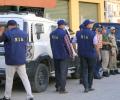
The action marks a big leap in NIA's efforts to destroy sleeper cells operated by Singh alias Arsh Dala to unleash terrorist attacks in various parts of Punjab and Delhi, it said.

Lieutenant Commanders Dilna K and Roopa A will remain at sea for 8 months. They will rely on wind power, do the repairs on the boat themselves and navigate some the world's most treacherous waters.

Road awards were muted in Q1FY25. But the pace will accelerate with a bidding pipeline of Rs 1.1 trillion (September 2024), mostly dominated by HAM (Hybrid Annuity Model) projects, which contribute 47 per cent and engineering procurement and construction or EPC projects, which have about 36 per cent share. Hence, infrastructure companies mostly reported revenue decline on a year-on-year (Y-o-Y) basis in Q1FY25.

But the ISI chief did not retire giving the impression that he has won General Asim Munir's trust, notes Rana Banerji who headed the Pakistan desk at RA&W.

Defence Secretary Lt Gen (retired) Alam Khattak told the Senate Standing Committee on Defence on Wednesday that RAW had set up a 'special cell' to sabotage the ambitious CPEC.

The BJP also went on to label Kaul a "Pakistani sympathiser" and posted headings of a couple of her writings on X.

Gangster Sachin Bishnoi, who was allegedly involved in the murder of Punjabi singer Sidhu Moosewala, was extradited from Azerbaijan and brought back to India on Tuesday, officials of the Delhi police said.

The top Assam cop further said that they (accused) have also given logistic support to the jihadi terrorists who came here from Bangladesh.

The accused have been identified as Rajpreet Singh, Virender Singh, Sachin Bhati, Arpit Dhankar and Susheel Pradhan, the police said.
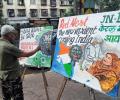
'Certain groups should be more cautious, especially the 60-plus population, and the population which suffer from co-morbidities like diabetes and hypertension.'

Sources in the military establishment also said the present global scenario "necessitates a flexible and adaptive approach" to tackle defence and national security challenges.

The status of the current submarine force level is alarming and we need to address the threat perceptions expeditiously. Critical decisions pertaining to national security cannot be delayed any further due to the rapidly changing maritime threat perceptions and growing strategic importance of the Indian Ocean region, asserts Commodore Venugopal Menon (retd).

Terrorism is the biggest curse for the society, he said, adding that if there is any country which bore the maximum brunt of terrorism, it is India.

Prime Minister Narendra Modi on Friday said production linked incentive (PLI) scheme, which is aimed at boosting domestic manufacturing and exports, is expected to increase the country's production by $520 billion in the next five years. Addressing a webinar on PLI scheme, organised by Department of Industry and International Trade (DPIIT) and NITI Aayog, through video conference, Modi said the government is continuously carrying out reforms to boost domestic manufacturing. In this year's Budget, about Rs 2 lakh crore was earmarked for the PLI scheme for the next five years and "there is an expectation that the scheme would result in increasing the production by about $520 billion in the next five years", he said. He added that there is also an expectation that the current workforce in the sectors, which will avail the benefits of the PLI scheme, will be doubled and job creation will also increase.

Some vaccine frontrunners are in advanced stages of trial and could hit the market by early next year, making the task of securing "last mile connectivity" and ensuring that nothing goes wrong before the shot is administered more urgent.
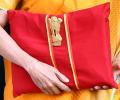
The Budget emphasises on capacity building and empowerment of marginalised sections of society including farmers.

He was a member of Azamgarh (Sanjarmur) module of the IM and was based in Nepal where he was teaching at a school.

The Delhi police made several arrests of key members of banned Indian Mujahideen this year including its chief Tehseen Akhtar but faced major law and order challenges with Trilokpuri riots and a 100 per cent spurt in crime graph in the national capital.

Indian Mujahideen co-founder Yasin Bhatkal and close aide Asadullah Akhtar were on Friday remanded in police custody for 10 days by a Delhi court in connection with a case lodged against them for the September 2010 Jama Masjid terror attack days before the Commonwealth games.
 © 2026 Rediff.com - Advertise with us - Disclaimer - Privacy Policy - Sitemap - Feedback - About us - Terms of use - Grievances